The Paper Bag Princess
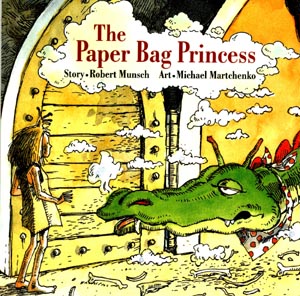
One example of a book using lines as visual elements is The Paper Bag Princess by Robert Munsch. Throughout the illustrator’s drawings, lines are used to create texture and shading while also outlining the elements in each picture. The use of lines creates the effect of sketching or drawing rather than painting as some illustrations appear.
This Is Not My Hat

One example of a book using the visual element of shape is Thisis Not My Hat by Jon Klassen. In this story, he uses shape to show fish and all of the underwater elements using circles and ovals in addition to lines. His work looks very similar to Lois Ehlert and Eric Carle in that his illustrations appear to be collaged from tissue or textured paper rather than drawn by hand.
Rodeo Red

Rodeo Red by Maripat Perkins exemplifies the use of color throughout the story. The illustrator, Molly Idle, uses pastel shades on each page that work well together and create a soft feel.Although her illustrations are not quite as vivid as Eric Carle’s bright and vibrant stories, they both use color as visual elements to set the mood of the story.
Martina the Beautiful Cockroach

In the story Martina the Beautiful Cockroach, the illustrator creates a world where the colors are vibrant and seem three-dimensional on each page. The combination of colors are contrasting and don’t necessarily “match” but do cause the characters to stand out. Texture is definitely a strong element used throughout Michael Austin’s illustrations.
Olivia

In Ian Falconer’s book Olivia, the illustrations are all on stark white pages with vivid colors of black and red. Olivia stands out on each page and is clearly the most important element on the page. The illustrator has used the element of line to create the bodies of Olivia and her family while using specific color to show definition. Texture is used through shadowing on the characters and setting.
It's a Book

In It’s a Book, the characters are relative to both adults and children. The monkey who is having a conversation with the tech-saavy donkey explains the difference in traditional books and technology using humor and the underlying message that there are benefits to using both.
The Three Pigs

In The Three Pigs by David Wiesner, he creates a twist to the original story of the three little pigs that makes it a unique rendering of the classic tale. By adding separate dialogue between the pigs, he created a plot that was unique and surprising.
Where The Wild Things Are

In Where the Wild Things Are, Maurice Sendak creates multiple scenes from the bedroom to the jungle with the wild things. His setting uses illustrations with neutral colors and sketching that sets it apart from any other children’s book.
My Teacher is a Monster

As a teacher, I enjoyed the theme in My Teacher is a Monster by Peter Brown. In this story, the underlying message shows the boy that “monsters” are not always as they seem and that teachers might actually have a reason for their rules and consequences.This theme is very relative to children, especially if they have ever been in trouble at school!
Meet the Dullards

In Meet the Dullards by Sara Pennypacker, she creates a mood using a dry story line unique to her style as an author. The Dullards live very dull lives in a very dull town. Paired with the illustrations,this story has hidden humor throughout that can also be seen in her other stories.
Mirror, Mirror

Although abstract, the illustrations in Mirror Mirror create a whimsical feel to a story that has traditional tales in the form of poems. In this book, the illustrations definitely set the scene and have such a beautiful details to complement what could have just been an ordinary rendition.
The Legend of the Bluebonnet

In The Legend of the Bluebonnet, Tomie DePaola researched the Comanche tribe and their customs quite extensively. He describes this endeavor in the author’s note on the inside cover. His characters and illustrations depict cultural markers to the best of his knowledge in this story.

No comments:
Post a Comment