Sunday, December 4, 2016

Food for Thought and Reflection

Technology is intertwined through many aspects of education for both student and educator use. With many districts putting quite a bit of their resources online, it is critical that librarians are at the forefront of how technology is used in order to guide teachers and students to the correct resources in the most efficient way. This semester, I used a wide variety of applications and software to develop tools that can be used to educate and engage students in the library.

After using many types of applications and software, I have learned that there are a multitude of tools available for any project or lesson. Of the projects used, my two favorite and most useful experiences were when creating infographics and screencasts. These were both tasks that I have needed before but not known how to create. The infographics were a little time consuming, but they pay off with the value of putting the most important information in the most concise way. The program I used to create infographics with the most success was called Piktochart (www.piktochart.com). The other tool I used with the most success created screencasts to teach or share ideas through computer screen recording. I fully intend to use this tool in the library to show the ways to access resources online. I had seen these videos online when trying to troubleshoot computer issues of my own but had not considered how to create one for the library or teaching. I used the program Screen-O-Matic to show how students could use the online library catalog to search for materials. It was incredibly simple and did not take long to navigate. Other programs like Jing were available to use for the same purpose, but there were not enough benefits to make one site much better than another.

Some software and applications that I used were not as simple to use or might be difficult to incorporate in the library. The Vine application is not being used anymore since it was discontinued. There are many apps that accomplish the same goal, so it lost its significance in the digital world. Podcasts are interesting, but I feel that they are more difficult to promote in the library. When listening is required, students may be less likely to access it on a regular basis. I feel that blogs are probably easier for students to access since they can be used anywhere technology is available.

After reading an excerpt from For the Love by Jen Hatmaker, she describes church mission work, which can easily be transferred to the world of technology and the users of it. This analogy is mind-blowing when people who use educational technology are compared to people with are hesitant about technology use. They absolutely have parallel similarities and differences when compared. I believe that the people being served or benefiting from educational technology is the community of staff, students, and families. Just like a mission trip, the librarian's job is to provide tailored instruction or assistance to accomplish the goal or mission that has been presented. In this case, using technology to become independent, critical-thinkers and problem-solvers is definitely the mission of the library. The experience of working with many types of software and applications to produce educational tools and resources has given me tons of ideas to use in the library. I look forward to the continued experience with new tools and plan to continue following educational blogs, feed readers, and podcasts in order to stay current with technology trends in education.

Adapted from Hatmaker, J. (2015). For the love: Fighting for grace in a world of impossible standards. Nashville, TN: Nelson Books. 

Tuesday, November 15, 2016

Media (is) the Message

The Great Media Debate was originally sparked by the research of Marshall McLuhan in 1964. The debate took place in 1994, which was 30 years after the original statements were made. It was pretty incredible that a man in the 1960s was thinking in such an innovative way that he was considering the media and technology before it even reached the peak of popularity. The two men in this debate were Richard Clark and Robert Kozma, who were both professors. Richard Clark believed that learning is not influenced by media, but it is instead affected by the method in which information is delivered. Robert Kozma believed that when media is used carefully and intentionally, it can provide more meaningful information.

When first looking at this debate (or really the original thoughts of Marshall McLuhan from 1964), I felt like it was important to define the word media before making a conclusion. Media is defined by the Oxford Dictionary (2016), media is defined as "the main means of mass communication (broadcasting, publishing, and the Internet) regarded collectively". Considering all forms of mass communication, I felt that I sided more with Robert Kozma because I believe that when there is purpose and meaning behind the media chosen to go with the material, it will be more effective for students. Media, especially apps and software, is not a "one-size-fits-all" category. The learning goals must be established before the specific media is chosen to present or research information. When I think of media, I automatically think of commercials. When companies brainstorm how they will advertise a new product, I believe media type is absolutely considered when deciding which route to take. Just as businesses want to sell their product, teachers and librarians want to give new knowledge and skills to students.

Designing lessons for students should definitely be planned with the type of media in mind. When considering the 21st-century skills students need, the use of technology may not always be the way to present information. Effective lessons can be planned with the use of paper media like articles and newsletters depending on the material being used.

Sources:

Media - definition of media in English. (2016). Retrieved November 15, 2016, from 
         https://en.oxforddictionaries.com/definition/media 

The media debate. (2012, August 30). Retrieved November 15, 2016, from          
         http://edutechwiki.unige.ch/en/The_media_debate 

Sunday, November 13, 2016

Podcasts

This week, I did some experimenting with different podcast websites and was surprised with my findings. Podcasts can be used for a plethora of purposes in the library, classroom, and school setting. I had a hard time finding one idea that I liked best since there were so many different options for creating a Podcast. I created several but then would see an idea that I liked even better and would change direction. Overall, creating a podcast was pretty simple, but I am sure there are tons more options if you are willing to pay for a membership with a hosting site since the free options were limited on size, time, and format.

The first site that I tried to use for podcast creation was SoundCloud, but I did not end up using it because of their membership. They offer a free trial but you still have to put in payment information and remember to cancel the membership within 30 days. I never remember to cancel, so I chose to find another option when creating my podcast.

On PodOmatic, their free option did not require any payment information, but I could not figure out how to actually record on this website. There was an option to add files but not one to record directly from the site. I used the app QuickVoice to record my voice and then uploaded it to the PodOmatic website. I loved their site and the embed player looked really great, but I could not get it to play once posted on my blog. It was extremely frustrating. I went with this website anyway because of their embed player layout. It looked much nicer than the other sites.

The third podcast website I tried out was PodBean. They were listed as one of the top results when I completed a Google search of best podcast websites. I didn't find much of a difference between PodOmatic and PodBean since their sites were very similar. The only downside was that the picture I chose to represent my episode was not the correct file format, so I chose a smaller picture. I created the same podcast episode on both PodBean and PodOmatic, but went with PodOmatic because their embed player looked much nicer. Unfortunately, I could not get either player to work when copied into Blogger. I am interested to see if there is a website that is all-in-one with recording and publishing because the only way I could do this for free was by using separate sites for each. I definitely think there are unlimited options with podcasts, and I plan to use them with students throughout this year to try out some of the ways I've read about during this exploration!

The podcast below is the one I created using the voice recording app called QuickVoice and the podcast publishing site called PodOmatic. I chose to create a podcast about the upcoming library events for December since I felt that parents and students could both listen to it. I felt that this was a great place to start but am very interested in creating podcasts with book discussions because that was going to be my next choice if I were stepping out of my comfort zone! Below my podcast are links to the websites I have used above. Thanks for reading!

(Excuse my voice! I've had a cold and just got my voice back this morning!)

The embed player was not working on my computer, but I put it below anyway with high hopes. Here's the link to the podcast just in case.

https://www.podomatic.com/podcasts/kgc01422394/episodes/2016-11-13T17_15_37-08_00


Websites from Post:

PodOmatic:
https://www.podomatic.com

PodBean:
https://www.podbean.com

SoundCloud:
https://soundcloud.com

QuickVoice (App Store Only)
https://itunes.apple.com/us/app/quickvoice-recorder/id284675296?mt=8

Sunday, November 6, 2016

Cartoons and Comics

This week, I looked at some different sites where users can create cartoons or comics in a pretty simple way! Kids love toonbooks and comics, so I knew it would be a good skill to learn in order to reach students. While it is not something I have ever been a fan of even as a child, comics do present information in an easy-to-read and straight-to-the-point approach. I used three different sites to create the comics and have posted a few examples below.

After creating a budget proposal in one of my other classes, I chose to create a comic that went with that. My proposal suggested getting iPads for students to check out and take home since the school where I work is very low-income and resources are scarce for students outside of school. If the proposal were approved, I would print this comic to display in the library or post it to social media to advertise the new option for checking out the iPads. This comic was created using www.toondoo.com and was very simple to design. I like how easy this website was to navigate, but the characters and themes took a little while to load. I found a place to save the comic, but it did not have the option for saving it straight to your computer. I eventually just took a snippet of the comic so that it could be copied into this blog post.


When looking at the ways that educators can use cartoons or comics in their classroom or library (Zimmerman, 2016), I loved the idea of using comics for students who are learning English as a second language. I thought that one option would be to print out a comic with blank speech bubbles for students to practice writing conversations between characters. At first, I was really excited about using www.MakeBeliefsComix.com but felt really limited with the options. I was instantly excited about using their animated characters but then realized it was only a couple which had this capability. The backgrounds were really limited and most were in black-and-white. I preferred the speech bubbles on ToonDoo because they allowed for adjusting the speech bubble's size whereas this website did not. The comic was much easier to save, but I preferred ToonDoo after using both.


The last toon site that I used was called Pixton. It was instantly engaging because it offered a quick tutorial after logging in for the first time. The user-friendly format made this site very appealing to educators because it even had the option for creating comics for lessons plans or for student use. Pixton was my favorite site to use by far. I enjoyed being able to move the arms, adjust facial expressions, and even change the skin tones of my cartoons! The options were very open-ended and cartoons were fun to create. For saving the comic, there were many options to post to social media, save as an embed link, and share via email. When I tried to download the comic as a picture, it required a premium account. It would be simple to use the snipping tool or a screenshot if needed. I used the embed link to post the comic below.

TooDoo:
www.toondoo.com

Pixton:
www.pixton.com

Make Belief Comix:
www.makebeliefcomix.com

Using Comics in Education:
http://www.makebeliefscomix.com/How-to-Play/Educators/

Sunday, October 30, 2016

You Tube, Animoto, and QR Codes

Hi there! Today, I will be looking over and reviewing a few different uses for technology in the library. First, YouTube is used in education for teaching lessons, recording learning experiences, and guiding students through activities. In the library, there are many procedures and tools that can be explained through YouTube. After looking over a few channels by schools, I have listed the most helpful and enjoyable videos for students on each of the channels.

The Norman High Library
Most Helpful: Getting Started with the NHS Library Website
Most Enjoyed by Students: Tiger Visits the Norman High Library

The Unquiet Library
Most Helpful: AP Exam Study Book Suggestion
Most Enjoyed by Students: The Students Become the Teachers

Pikesville High School Library
Most Helpful: Pikesville High School FAFSA
Most Enjoyed by Students: The Panther Library Shakes

BBMS Media
Most Helpful: Bring Them Back Overdue Book Parody
Most Enjoyed by Students: Dr. Katherine and the Book Hoarder

When looking at each channel, I sorted by most popular videos within each channel to see which videos students watched more often. Using that information and considering the content of the video, I made the list above based on these criteria.

Another tool used in the library is Animoto which allows users to create videos using pictures and text. I have created the book trailer below, but there are many options for using it in the library.


QR Codes create a unique code to scan linking users to a site or program quickly. They can be used for scavenger hunts, research sources, and linking directions or videos throughout the library. I look forward to using them frequently, especially for directions or tutorials for library services. It would be simple to create cards with QR codes with links to screencasts or videos to guide students through library procedures and resources. Below is a QR code to link to the above Animoto book trailer. It was simple to create using the website QR Code Generator (www.qr-code-generator.com).


Sunday, October 23, 2016

Instagram, Vine, and Screencasts

          While I have seen Vine videos and used Instagram for social and personal reasons, I have never considered using them for educational purposes. After looking at the links provided, I was surprised with the possibilities. It took me an extremely long time to figure out how to insert the embed link into the Blogger page, but I was successful after many tutorials. (Too bad the Instagram picture is huge though!)
          When considering how to use Vine, I was surprised with how simple it was to create a video that was only six seconds yet it included the information I needed. I thought about the new books I just received from Scholastic and how they often go unnoticed if they aren't featured properly. A Vine video is perfect for this! It took several attempts to get the timing and video to look like I wanted, but I was happy with it in the end.
           For the screencasts, I used both Jing and Screencast-O-Matic. Both were extremely simple to use and did not take long to download at all. I felt that I like the user-friendly layout and was surprised with the simplicity to navigate. I had always wondered what people used to create tutorials online! I am thrilled to know how to use this function and could find it extremely helpful when explaining information or technology to teachers, parents, substitutes, etc. I used the Jing program to create a tutorial for finding the online library catalog for the district where I work. I used Screencast-O-Matic for creating a Popplet using the website rather than the app. After using both programs, I really and truly could not decide which one would be my favorite since they were so similar. I could not get the Jing video to convert to a video file, so I wasn't able to put it on the Blogger after many attempts and uploads. The Screen-O-Matic is my favorite program simply because of how quickly it uploaded to my blog.


Sources:

Instagram. (n.d.). Retrieved October 23, 2016, from https://www.instagram.com/

Screencast-O-Matic. (n.d.). Retrieved October 20, 2016, from http://screencast-o-matic.com/

Vine. (n.d.). Retrieved October 23, 2016, from https://vine.co/

Sunday, October 16, 2016

Infographics

Infographics are extremely popular across the internet for sharing statistics, charts, and information in a visually-appealing format. I had always been curious about how they were created when seeing one on Pinterest or social media. When creating the infographic, I chose to use the information from the report called Parents, Teens, and Digital Monitoring by Monica Anderson. Most of the report contained statistics that were surprisingly high for what I expected. After watching several different videos on how to create the infographic, I was impressed with how simple it was to design one using Piktochart. 

I tried to create the infographic online using Easel.ly and Infogr.am, but their layouts that were available for free were not as appealing for the information I needed to include. Pie charts, bar graphs, and maps were not suitable for the research findings in the report. Easel.ly had a design that I liked, but the site took a long time to load and was glitchy when trying to click on the different blocks. For what I needed, Piktochart worked really well to present the information. I feel that I could have created the infographic just off of their guided steps while designing it for the first time. The page had tips and guides to walk you through the process. I look forward to using infographics for my students and in the library now that I know how simple they can be to create.


Sunday, October 9, 2016

Blogs and Feed Readers

Feed readers are convenient and simple to use for quick and concise blog reading. After downloading the app called Feedly, I was amazed at the streamlined look of the feed and how simple it was to use. The blog posts were arranged by top stories in chronological order. I chose to follow several blogs and created folders to organize the blogs by the content. For easy browsing and reading, I created folders for school library, library organization, school librarians, and public libraries. The following blogs are a few that are frequently featured on the home feed screen for posts that are the most popular.

The Library Voice
http://vanmeterlibraryvoice.blogspot.com/

This blog posts a variety of information that spans from technology to library organizational tips and lesson planning. I followed this blog because of their most recent post about using Omniboard to promote creativity. The blog is very easy to read and the author, Shannon Miller, has a wide variety of experience in both the classroom and library.

In the Library with the Lead Pipe
http://www.inthelibrarywiththeleadpipe.org/

As you may suspect, the name of this blog was intriguing enough to add and see what it was all about. This blog, written by various bloggers, covers such a large variety of posts ranging from diversity in library staff to library framework. Users may submit posts on the blog to be reviewed and approved by the editorial staff.

Letters to a Young Librarian
http://letterstoayounglibrarian.blogspot.com/

Written by Jessica Olin and occasional posts from other bloggers, this blog was absolutely perfect for someone who is new to the library. Her blog contains a variety of information that serves as advice from an experienced librarian to new librarians. She walks through her first month as a librarian and details some insights she gained from her experience. Her blog also contains excellent information about assessment and library framework. Because of the name, I chose to add this to my feed reader to see her recent blog posts.

YALSAblog
http://yalsa.ala.org/blog/

From grants to book week celebrations, Young Adult Library Services' blog presents a vast variety of information about events and publications. The posts are professionally-written by a variety of bloggers which contributes to the array of information. I chose to follow this blog because I was already familiar with the organization and knew they published credible and reliable articles.


Librarian Problems
http://librarianproblems.com/

Since the other blogs I have listed are all educational and involve some forms of professional development, this blog is more of a guilty pleasure since I have found myself amused by the memes posted daily. Filled with library memes, it is both entertaining and amusing while sympathizing with the small frustrations and celebrations that are experienced in the library.

Overall, Feedly makes blog reading so much quicker than looking at each blog individually. I utilize the folders for all aspects of life since they can be separated to look at blogs that cover so many subject areas. It is very organized and efficient. In addition to setting up a Feedly account, I also began using Tumblr to see blog feeds as well. I enjoy seeing the different posts since they are not always text-heavy posts but usually feature photos, memes, and graphics.

My Tumblr Account URL:
http://mrschaudronreads.tumblr.com/

Sunday, September 11, 2016

Social Media in School Libraries

Social media is here to stay, and there are two viewpoints about its use in educational settings. The concerns with cyberbullying and inappropriate posts are understandable, but do the benefits outweigh these negative risks? According to Adelstein and Barbour of the SAGE Encyclopedia of Educational Technology, the use of social media equips students with the ability to collaborate, think critically, communicate, and be creative. (p. 3) Social networking, blogging, and bookmarking are all outlets that students use on a daily basis. Why not use them for educational purposes rather than purely social, especially for students who are less eager to learn? I can understand a sympathize with a few of the concerns, mostly with younger children. In the district where I teach, we have several students who are under protective custody or even parents who just don't want their children's photos all over the internet at such a young age. While I am not a parent, I would feel the same about my own children being exposed online using a public site like Facebook or Twitter. There are many reasons that families are not exactly supportive of the use of social media in schools.

When exploring social media, I looked at the use of Facebook and Twitter to analyze how schools are using these outlets to connect with students and families. Facebook had many more pages dedicated to school libraries than expected. When typing in "school library", both elementary and secondary libraries were listed. The page for Alexander Elementary School in Booneville, Mississippi is operated by their librarian and is kept very current. She posts reminders about school functions, any needed donations, pictures of school events, and notifications of important due dates. Most of the comments were posted by families who had children in the photos who were tagging other family members so they could also see the pictures. Some comments were from teachers or community members excited about the school's events. The page for Cinco Ranch High School Library in Katy, Texas looked quite different from that of the elementary page. Cinco Ranch's page was also operated by their librarian, but it did not contain any student pictures. The page had posts about events and due dates as well as updates about different programs operated through the library. I was surprised at the lack of pictures, because I would imagine that more parents would consent to their teenager being photographed than their young child. In addition, there were less comments as well. In the past six months, only one of the posts had a comment, and it was from a local business. A few posts were liked but comments were rare.

On Twitter, I enjoyed reading some of the articles linked to the leaders in educational technology. Either they had insightful posts or were linked to excellent posts created by other authors. I really enjoyed reading Gwyneth Jones' Twitter page (@GwynethJones) because she had such a range of information posted. While she occasionally posted about technology use, she also had everything from book reviews to pictures of places she has visited. Her enthusiasm and fun layout on her page made it very enjoyable to read and visit. Kathy Schrock's page (@kathyschrock) was slightly frustrating in my opinion. I felt very overwhelmed with the terminology and felt that I needed an introductory course to learn the lingo before reading her posts. Jim Lerman (@JimLerman) had practical information for use by teachers and librarians. Of all the edtech leaders, he was the most understandable person to follow. His language was much less technical and html-based and more relatable. I also noticed that he retweeted more than the other feeds that I viewed. Buffy Hamilton (@BuffyJHamilton) had a very unique page because she asked technology questions in addition to giving advice for educational staff. She asks her readers troubleshooting questions that she encounters as well as retweeting when she finds the answers. Overall, Twitter is a vast community of both learners and leaders. It can be equally as beneficial to both adults and students when used in the correct way.


Sunday, July 24, 2016

Boys Don't Knit (In Public) by T.S.Easton


In a gender-role sensitive world, this book has come at just the right time. I thought this was perfectly written and captured the true message that if you enjoy something, embrace it. Ben Fletcher got in a bit of trouble for stealing and signs up for a class as part of the consequence. He thinks he has signed up for a class with a teacher he has a crush on, but instead he has signed up for a knitting class! While he thinks it is a girly hobby and doesn't even want to give it a try at first, he eventually discovers that this may be his passion since  he is good at it and it calms him down. Friends and family don't understand his new passion, so he struggles with the decision to embrace it or hide it away from everyone. This book is an incredible read for any teens since most people can relate with a secret hobby or passion that they may be afraid to share due to stereotyping or family beliefs, Author T.S.Easton did a wonderful job portraying the difficult situation and later shedding light to make readers happy from cover to cover.

2016 Quick Picks for Reluctant Young Adult Readers

 Easton, T. (2016). Boys don't knit: In public. Square Fish. 


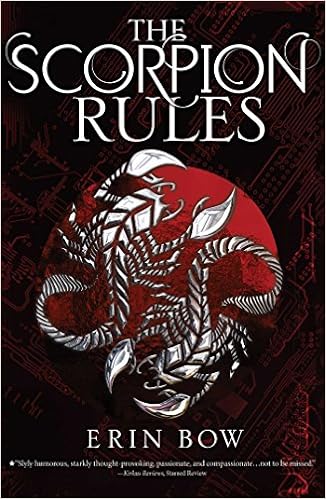
The Scorpion Rules by Erin Bow


This book is not something I would have ever chosen for myself but had such intense plot and story development that it was very suspenseful. I prefer books with well-developed characters, and this book did not do a great job with this. As the title suggests, a fictional society has a specific set of rules enforced the government and people. The setting takes place in a dystopic society where hostages are essentially exchanged for political justice and power. One of the main characters is named Talis who works during the entire book to maintain peace and justice without harming others. When cities declare war, they are bombed and destroyed to send a message. I would recommend this book for teens (older than 13 years of age) just because of the language and violence.

2016 Quick Picks for Reluctant Young Adult Readers
Bow, E., & Bernet, J. (2016). The scorpion rules. Paris: Lumen. 

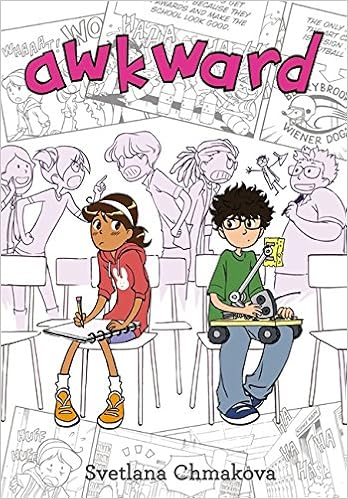
Awkward by Svetlana Chmakova


Peppi can't catch a break at her new school and goes out of her way to remain unnoticed. This doesn't last long since she starts out the first day of school by tripping into a boy in the hallway and proceeds to shove him to look cool. Determined to apologize, months go by and Peppi cannot grasp ahold of her anxiety long enough to apologize for the situation.Jaime is apart of the Science Club at their school while she is a member of the Art Club. After finally apologizing for her actions earlier in the year, their friendship is difficult to maintain since their clubs are rivals. They are stuck in the middle of the two clubs as they battle it out to see who will earn a seat at the club fair. While they attempt to be civil, this rivalry makes life more difficult than expected. This is a sweet graphic novel about friendship, difference and acceptance while being a teenager and would be the perfect addition to any library.

2016 Great Graphic Novels for Teens

 Chmakova, S., Xu, R., McCommon, M., & Lee, J. (2015). Awkward. New York, NY: Yen Press. 

Out of Darkness by Ashley Hope Perez


This book is a must-read for young adults, especially with racial tension playing such a large role in the media recently. The author set the scene for this book in East Texas during the 1937 school explosion while a young girl named Naomi who is Mexican and Wash who is African-American. The challenges they face in this small oil town will enlighten those who have never experienced racial turmoil before. Naomi finds a close friend in Wash which creates issues throughout their town. I felt that readers of all ethnicities would be filled with emotion reading this intense and dramatic page-turner of a story by Ashley Hope Perez. This book has a story that will enlighten and challenge young adults around the world.

Printz Honor Award 2015

Pérez, A. H. (2015). Out of darkness. Minneapolis, MN: Carolrhoda Books. 

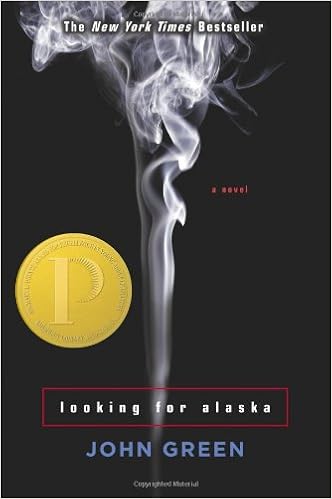
Looking for Alaska by John Green


Written with two parts, before and after, author John Green brings a unique twist to a dramatic mystery to find answers. In the before sections of the book, Miles meets new friends at school after a big move. He meets Colonel, Alaska, and Takumi without realizing what lied ahead. Miles'new friends introduced him to social life and drinking. Over time, Miles falls in love with Alaska who we find out in the after section was killed in an accident. Her friends don't want to believe the news and decide to open their own investigation to find out what really happened to their friend. This story is the perfect read for teens of all ages with themes of drama, love,, and language throughout.

Green, J. (2005). Looking for Alaska. New York, NY: Dutton Books. 

Friday, July 22, 2016

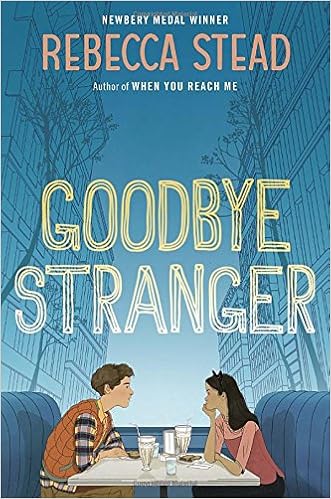
Goodbye Stranger by Rebecca Stead


This book is about a girl named Bridget who suffered from a roller blade accident and has a new view of life based on the advice from a nurse while she was in the hospital. Determined to make a difference and not give in to stereotypes, Bridget builds friendships and attempts to make the best of her junior high experience. After her accident, Bridget changes her name to Bridge in addition to her new positive outlook on life. Her friends at school stay close with her and act as huge supporting roles when things get tough. In a time where most stories about teenagers involve bullying and drama, it is a nice change of pace to see friendships where people are being built up rather than torn down. 

Stead, R. (2015). Goodbye stranger. New York, NY: Wendy Lamb Books. 

The Rat with the Human Face by Tom Angleberger

The Rat with the Human Face: The Qwikpick Papers by [Angleberger, Tom]


The town of Crickenberg might seem quiet and somewhat boring, but Lyle and his friends are determined to find an adventure. They have formed a society called the Qwikpick Society and are looking everywhere for a second mystery to solve. Just when their efforts seem somewhat underwhelming, they overhear someone talking about a rat with a human face that is in an old building. Their efforts to find this creature are quickly ended when Lyle is caught misbehaving and the society's future is at risk. This book reminded me of the Diary of a Wimpy Kid books and has a similar lighthearted style that would appeal to many teens.

Angleberger, T. (2015). The Rat with the Human Face (The Qwikpick Papers). New York, NY: Amulet Books. 

Thursday, July 21, 2016

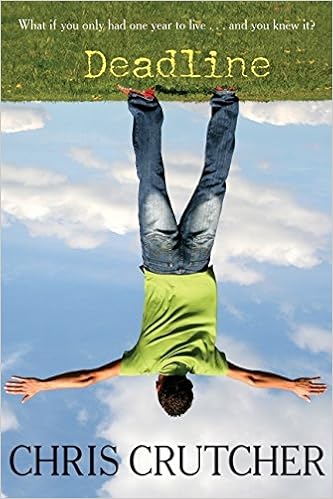
Deadline by Chris Crutcher


This book tells the story of a boy named Ben who has a blood disease that has only given him one year to live. Any other teen would have confided in a friend or relative but not Ben. He chose to decline treatment and did not want anyone to know about his disease or how long he had to live. The one thing he knew for sure was that he was going to make a difference and live life to the fullest. Ben's confidence and attitude drives him to befriend a beautiful girl at school, join the football team, and stand up to a teacher at school. After building relationships with friends and classmates, he decides that they should know about his illness. He shares his news with them and has their support as he finishes out his last projected year of life. I think this book was very challenging to read both mentally and emotionally. As a teenager, I would not have chosen a book about this topic because I know it would make me emotional. While this book was written for teens and young adults, I feel that many ages would benefit from the life lesson Chris Crutcher has presented through the main character, Ben.

Crutcher, C. (2007). Deadline. Retrieved July 19, 2016, from https://www.amazon.com/Deadline-Chris-Crutcher-ebook/dp/B0026772Y2/ref=tmm_kin_swatch_0?_encoding=UTF8&qid=1469139066&sr=8-1 

Tuesday, July 12, 2016

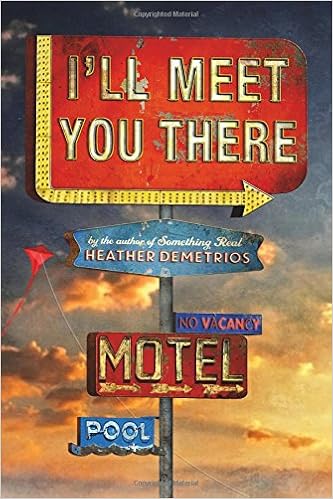
I'll Meet You There by Heather Demetrios


This story takes place in a small town in California called Creekview. Skylar and Josh had been acquaintances. Skylar had just graduated high school and college was just within her reach. Josh had joined the Marines and while deployed in Afghanistan, lost his leg in an explosion. Skylar's dreams of college were put in jeopardy as her mother lost her job and her substance abuse began to threaten her dreams. Josh and Skylar found themselves working at a hotel. They formed a bond and a wonderful friendship developed. This friendship eventually blossomed into a romance.This story was written from alternating points of view although Skylar's part is longer. Josh's point of view is more about the things he didn't share publicly. This book is heartfelt and emotional as each deal with struggles and forma bond to help each other. This book is recommended for the mature young adult audience due to themes of war and adult content.

2016 Best Fiction for Young Adults (YALSA)

Demetrios, H. (2015). I'll meet you there (1st ed.). New York, NY: Henry Holt & Co. 

Sunday, July 10, 2016

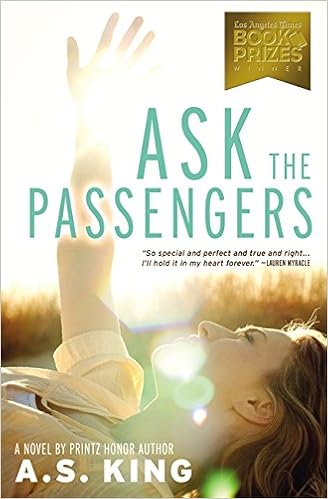
Ask the Passengers by A.S.King


Astrid Jones does not fit the expectations set by her family and does not feel comfortable sharing her secrets. In an effort to vent, she lays on a picnic table in her yard and talks to the passengers on airplanes as they fly overhead. She does not think her parents will agree with her lifestyle and would be upset to know that she likes girls. While she wants to tell her friends and family, she does not feel that it is a safe environment. I would recommend this book to young adults in high school and possibly more for girls due to the nature of the topic. Astrid has tons of questions and wants answers without being condemned for being curious.

King, A. S. (2012). Ask the passengers: A novel. New York, NY: Little, Brown. 

Saturday, July 9, 2016

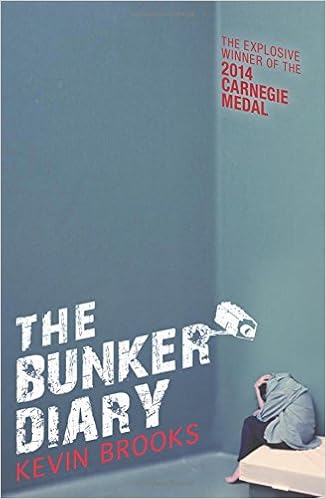
The Bunker Diary by Kevin Brooks


Told through diary format, Linus explains the terrifying events that took place after being abducted and trapped in an underground bunker. He thought he was helping a blind man when suddenly he wakes up in a nightmare with five other abductees. Having to figure out their surroundings and captors, this story was a page turner and kept the reader hoping for a happy ending or great escape from the bunker. The people who were abducted were all different ages and personalities but were all united in their efforts to escape.

2016 Best Fiction for Young Adults (YALSA)

 Brooks, K. (2015). The bunker diary. Minneapolis, MN: Carolrhoda Books. 

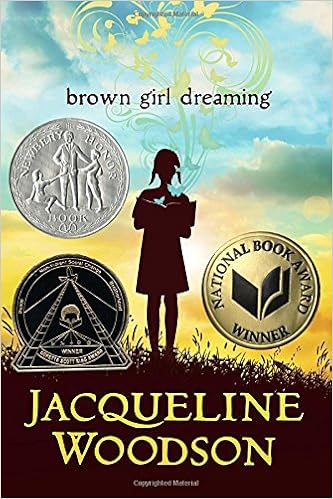
Brown Girl Dreaming by Jacqueline Woodson


Jacqueline is an African American girl growing up in the 1960s facing the challenges of being a minority amidst the racial tension of the country during that time period. With the remnants of Jim Crow and her growing awareness of the Civil Rights Movement, she wrote beautiful poems about what it was like to grow up in this era. This book is suitable for anyone who is interested in Civil Rightd, specifically young adults who are African American or wanting enlightenment on this time period and the struggles that were faced.

Woodson, J. (2014). Brown girl dreaming (1st ed.). Nancy Paulsen Books. 

Thursday, July 7, 2016

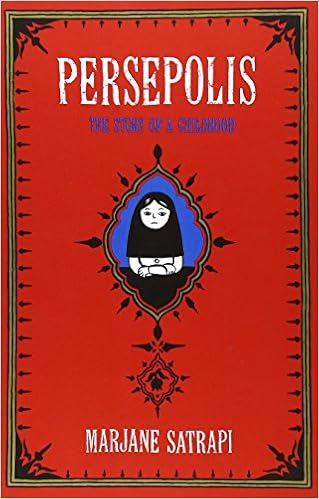
Persepolis by Marjane Satrapi


Persepolis is a graphic novel which tells the story of its author and her childhood in Tehran, Iran. It details her family life during the 1979 Iranian Revolution. Iran isn't actually evil, but the people who ran the country were. Marjane grew up in Iran just as things started getting bad. Students were separated by gender and family members were being executed simply because they were thought to be spies. It was a rough time to grow up there, but Marjane not only survived protests and bombings-- she moved back and forth to Vienna. This book would appeal to other persecuted citizens or those who had family dealing with persecution. Also, students who do not understand immigration may read this to understand how fortunate life can be in comparison to what Marjane went through as a child.

Satrapi, M. (2004). Persepolis (1st ed.). Barcelona: Norma Editorial. 

Wednesday, July 6, 2016

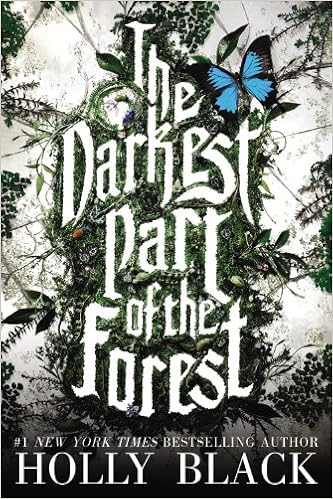
The Darkest Part of the Forest by Holly Black


The setting for this dark fantasy book takes place in a town called Fairfold. Humans and the fae live here. It is a protected existence as long as tourists come to see the glass coffin in the forest where a cursed prince and his horns are found. The main character is Hazel, who serves as the narrator. Hazel is complicated and explores relationships in many aspects of life. The first is her brother, Ben. The second is Jack, who she secretly wishes would love her back. She also explores the relationship with herself. This book is full of twists, turns, and reflections. It explores guilt, secrets, relationships, courage, fate, and choices. The book could be controversial for very young readers due to content.


Black, H. (2016). The darkest part of the forest. New York, NY: Little, Brown Books for Young Readers. 

Sunday, July 3, 2016

Gabi: A Girl in Pieces by Isabel Quintero

Gabi, a Girl in Pieces by [Quintero, Isabel]


Gabi's diary tells all about her teenage life during her senior year. She is an amazing friend, caring daughter, and has a million things going through her head at any given moment. Learning from her mother's past getting pregnant outside of wedlock, she is very cautious and thoughtful about the consent and desire for sexual relationships. When her friend is raped by a boy at school, it consumes her life and she begins to think about how many others have been affected in similar situations. Gabi has incredible thoughts about the way women's bodies are portrayed in the media and by others. She is described in such great detail that I felt like Gabi was a real girl that I knew by the end of the book. Any teenage girl who reads this book will be challenged to think deeply and encouraged to be courageous regardless of the outcome. This book was phenomenal.

Quintero, I. (2014). Gabi, a girl in pieces. Retrieved July 3, 2016, from https://www.amazon.com/Gabi-Girl-Pieces-Isabel-Quintero-ebook/dp/B00LDYEVZ2/ref=tmm_kin_swatch_0?_encoding=UTF8&qid=&sr= 

Friday, July 1, 2016

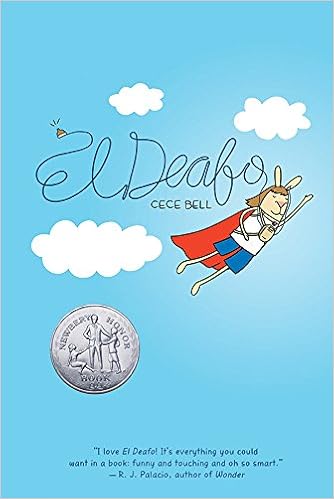
El Deafo by Cece Bell


Cece was four years old when a case of the meningitis almost took her life. While she survived, her hearing was impacted causing her to be deaf. A hearing aid helps but does not assist her in understanding. Life can be pretty hard for any child, but Cece struggles with everyday situations like slumber parties where some things can be more challenging. This book has some comic relief when her sonic ear allows her to hear her teachers both in and out of the classroom, which she describes as a super power of sorts. This book has a beautiful message to inspire any children who feel different at times but also makes other children aware of diversity. I loved seeing the illustrations in the graphic novel since they used clever drawings like the other children having bunny-like ears representing their hearing compared to Cece's. This books is inspiring for any young adult and has a sweet message with comic relief throughout.

Bell, C., & Lasky, D. (2014). El Deafo. Retrieved June 30, 2016, from https://www.amazon.com/El-Deafo-Cece-Bell-ebook/dp/B00LW8U2UM/ref=tmm_kin_swatch_0?_encoding=UTF8&qid=&sr= 

Thursday, June 30, 2016

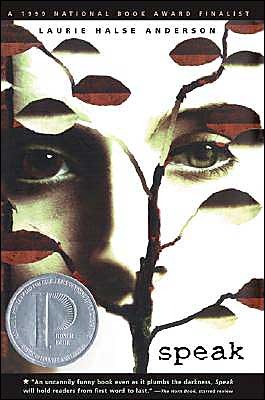
Speak by Laurie Halse Anderson

439288

Melinda Sordino made one critical mistake, and that was when she decided to be honest about a secret party that was held in a private location. While she did the right thing, her peers do not share this feeling and bully her until she questions her existence. With no friends and the torment of being raped by a peer, Melinda feels that there is no where else to turn when she tries to warn a friend who dates her attacker and is not believed. In order to get revenge for telling on his actions, the boy goes after Melinda a second time. Her miraculous rescue and constant mental anguish is a story that all teens need to read regardless of gender. This book raises awareness for victims of rape and sexual assault while giving readers the confidence to come forward if they ever experience this personally. The author did an incredible job of creating a story that could appeal to many different groups of young adults. This book not only addresses sexual assault, but it also speaks volumes about the presence of cliques and bullying. Melinda is a character that many teens could relate with as well.

 Anderson, L. H. (1999). Speak. New York, NY: Puffin Books.

Wednesday, June 29, 2016

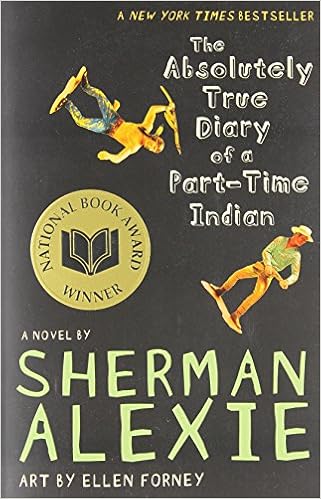
The Absolutely True Diary of a Part-Time Indian by Sherman Alexie

Before reading this book, I was expecting a serious book about the everyday life on a reservation. I was beyond surprised to read the comedy and sarcasm throughout the book. In this book, Junior is a young Indian who lives on a reservation, but changes his mind about his path through adulthood since he decided not to attend their school. While it seems like he moves schools and unfortunate things keep happening along the way, he manages to still see the light in the darkest situations. I believe any teen could benefit from this book in so many ways. Junior is very admirable because he chooses between staying on the reservation with a predictable life or moving away and starting new adventures. I know that students would benefit from Junior and his optimism in even the darkest situations.

Alexie, S., & Forney, E. (2009). The absolutely true diary of a part-time Indian. London: Little, 
                 Brown Books for Young Readers.


Sunday, June 26, 2016

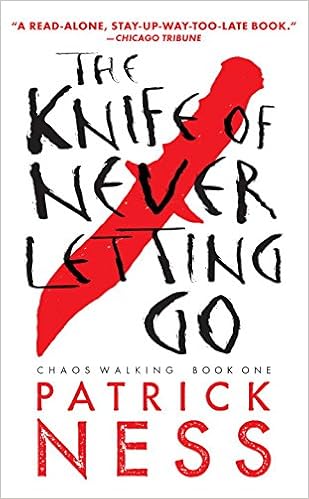
The Knife of Never Letting Go by Patrick Ness


In this book, Todd Hewitt is being chased by a group of men who are not happy with a secret he has uncovered about the dytopian society where he lives called Prentisstown. Before his escape, a germ was spread that allowed men's thoughts to be heard aloud. While on route to discover the new world, he meets a girl named Viola who is a survivor of a crash landing. When Viola gets hurt, Todd is forced to give up their only hope for survival in order to save her life. Because it is the first part of a series, the ending leaves the reader hoping for more. This book is great for anyone who enjoys similar books about dystopian societies like The Hunger Games and Divergent. I enjoyed the action and suspense throughout this young adult novel.

Ness, P. (2008). The knife of never letting go (Chaos walking). Cambridge, MA: Candlewick Press. 

Thursday, June 23, 2016

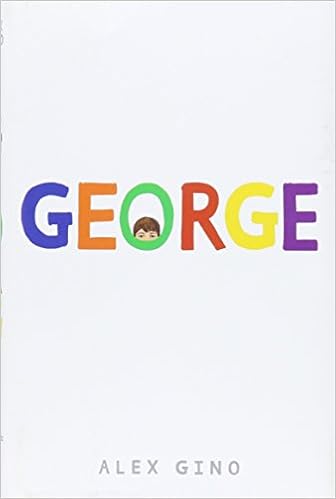
George by Alex Gino


This book speaks volumes for all teens who struggle with gender identity, especially if their family is like George's. She lives a secret life that she dreams of making a reality if she can secure the part of Charlotte in the school play. She feels that if her mother sees her in the play, she might respect her feelings and identity as a female. She may not have been born as a female, but her mother has difficulty accepting that she does not identify as a male. This story about a transgendered teen will give young adults a sense of understanding and comfort if they are also facing the same challenges or simply want to understand. This book is unique and important for today's society and the stereotypes being thrown around the LGBTQ community.

Gino, A. (2015). George. New York, NY: Scholastic Press. 

Monster by Walter Dean Myers

Monster by [Myers, Walter Dean]


This book really provoked thought and discussion in my home after reading it. The justice system does the best effort with the facts they have and must do their best to discern the truth. Unfortunately, Steve must go to trial and hope that the facts line up to escape the jail time he may face for assisting in an armed robbery and murder. This thought-provoking screenplay has the reader hoping that King is found guilty for the murder and that Steve is not wrongly accused. While the scales are balanced at the end of the book, the words certainly take the reader on an emotional roller coaster while the case is built up. In a literature class, this book would be interesting to use for debates and scenarios.

Myers, W. D., & Myers, C. (2009). Monster. Retrieved June 22, 2016, from https://www.amazon.com/Monster-Walter-Dean-Myers-ebook/dp/B001MYJ3JM/ref=sr_1_1_twi_kin_2?s=books&ie=UTF8&qid=1469040794&sr=1-1&keywords=monster 

Thursday, June 16, 2016

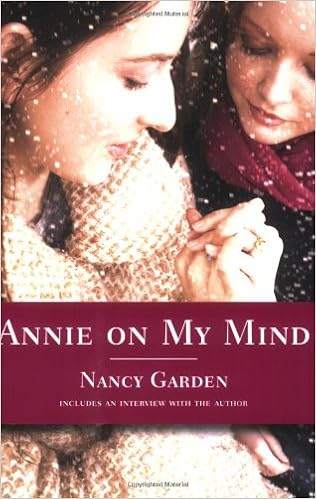
Annie on My Mind by Nancy Garden


When Liza and Annie first lay eyes on each other, they knew instantly that there was a connection. They become inseparable friends until they discovered that their feelings were deeper than just a friendship. To make life simpler, they decide to keep their feelings a secret since their families may not understand. While suppressing their love inside, they only become courageous enough to act on their feelings after seeing two female teachers during a visit at their home. When they decide to act on their love, they are caught and are forced to face their families. They decide that no matter what the outcome may be, their love will overcome all and they will remain loyal to each other. This story would be an excellent book for teens who may be struggling with the conflict of whether to share their sexual orientation with others. It can be extremely intimidating, so this book would help students see that sometimes you must face your fears in order to be truly happy in the long run.

Garden, N. (2007). Annie on my mind (1st ed.). New York, NY: Square Fish. 

Monday, June 13, 2016

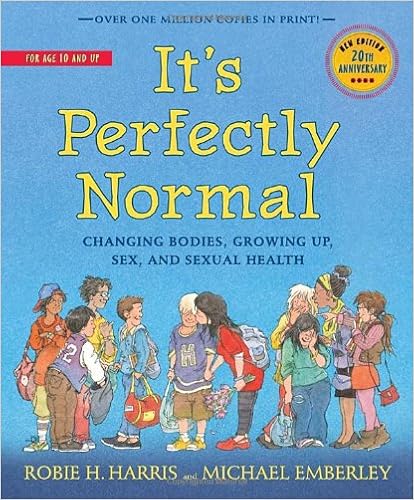
It's Perfectly Normal by Robie H. Harris


This book was written to teach older students about sexual health and relationships through maturing as an adult. This information is important for children going through puberty, but the way it is represented could become a problem if found in the wrong hands. The full color illustrations of people without clothing has become a complaint from many parents for several years. Included in the book are facts and statistics about sexually-transmitted diseases, stages of puberty, risks involved with intercourse, sexual orientation terminology, and other related information. This book is appropriate for some 4th graders but probably would be better suited for 5th grade and above. I recall having a similar book as a young teen and utilized it many times when I heard friends talking about puberty but didn't want to ask parents. I would much rather see a child reading this book to self-educate than see them wander obliviously with many questions.

Harris, R. H., & Emberley, M. (1994). It's perfectly normal: A book about changing bodies, growing up, sex, and sexual health. Cambridge, MA: Candlewick Press. 

Saturday, June 11, 2016

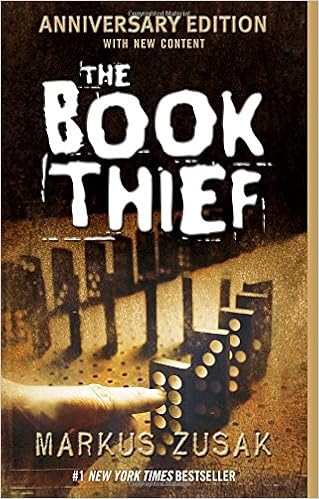
The Book Thief by Markus Zusak


Liesel is a nine-year-old girl in Germany prior to World War II, but she does not have fortunate luck. On the way from Munich to a foster home, her brother dies on the train. When he is buried, she notices that the gravedigger has a book, so she steals it and takes it with her. She can't read, so Hans teaches her how and they read the book together. At one point in the story, they worked by cleaning houses and noticed that one of their clients had many books. The client was the mayor's wife. Once she ends the cleaning services, they start stealing her books to read. It doesn't take her long to figure out, so she begins leaving notes and paper for Liesel to read and write stories of her own. Amidst the political unrest, she is taken away without her book. When it is found many years later, she reads through it and reminisces on the difficult times as a child. This book did not peak my interest immediately because I do not typically enjoy stories with historical settings. There are many lesson to be learned by the experiences listed and hard times she must face. Written for teens and young adults, I feel that high school students would be more likely to read and enjoy the nature of this book.

2016 New York Times Young Adult Paperback Bestseller List

Zusak, M. (2006). The book thief. New York, NY: Alfred A. Knopf. 

Thursday, June 2, 2016

Winger by Andrew Smith

Winger by [Smith, Andrew]

Ryan Dean looks your typical boarding school kid, except he's not really at all. As a fourteen-year-old boy passed through the gifted program and living in a dorm room with a bully, it seems like life is as difficult as can be. In addition to the roommate, Ryan has a huge crush on his friend Annie, but he must change her viewpoint of him just being a little kid to being a potential boyfriend. This book is the perfect combination of comedy and emotions that makes it a challenge to put down. The unique attribute to this book is that the audience could be teen guys or girls since it is so well-balanced. Ryan shows how truly challenging it can be to grow up in more ways than one.

Smith, A. (2013). Winger. Retrieved June 2, 2016, from https://www.amazon.com/Winger-Andrew-Smith-ebook/dp/B005C78E86/ref=tmm_kin_swatch_0?_encoding=UTF8&qid=1469139643&sr=8-4 

Tuesday, April 19, 2016

Reviewing Historical Fiction

The Watsons Go to Birmingham by Christopher Paul Curtis


The genre of historical fiction lends itself to being a timeless look into the Civil Rights Movement during 1963 through the eyes of an African American boy’s childhood. It was written in 1995 after segregation was an issue but the setting and events are described in a way that make you feel as if you are standing in Birmingham during those days. The integration of a real event with a relatable family brings a different perspective on this important historical time period and what it may have been like as a teenager during The Civil Rights Movement. The main character, Kenny, comes from a family who is coined as being a little different. He has a visual impairment which can relate to any child with a hindrance in their health or appearance. Despite a more serious theme, this book has plenty of comical relief as found in most family interactions. All of the characters in this story relate to any reader in some way. With many events happening and the plot thickening, this story doesn’t feel like an average historical story but feels more like a dramatic show on television. The theme of the Civil Rights Movement is a concept that many students already have prior knowledge about. It makes the reader realize that history is made during regular events and also that it happens to regular people.
          The Watsons Go to Birmingham was the author’s first novel which sparked his writing career for later books. He was recognized with the following honors:
  • ·       Coretta Scott King Author Honor
  • ·       Golden Kite Award
  • ·       Newbery Honor Book
  • ·       California Young Reader Medal
  • ·       New Mexico Land of Enchantment Award
  • ·       Texas Lone Star Reading List

In 2013, this book was made into a television film for the Hallmark Channel based on the same events and storyline. 

Below are several adaptations for this text and other editions available to view or read.


As a special edition movie tie-in version trough Barnes and Noble:
http://www.barnesandnoble.com/w/watsons-go-to-birmingham-1963-christopher-paul-curtis/1100291117?ean=9780385382946

As an e-book from Bright Star Schools and Kindle:
http://www.brightstarschools.org/view/1216.pdf
http://www.amazon.com/Watsons-Birmingham-1963-Christopher-Paul-Curtis-ebook/dp/B000FC1KWU

As a downloadable audiobook from Archive.org:
          https://archive.org/details/WatsonsGoToBirminghamCPCurtis


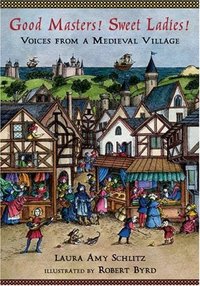
Good Masters! Sweet Ladies! by Laura Amy Schlitz


          The genre of historical fiction makes the past seem realistic whether the time period was ten years ago or a hundred. This genre uses realistic characters or situations set in the past which creates a world that reader can easily relate to while reading. Set during the medieval times in an English village, Good Masters! Sweet Ladies! uses the lives of over twenty characters to bring humor and entertainment to its readers. With middle school students as the target audience, the Laura Amy Schlitz created a play that would both inform and entertain students about the middle ages. The interactions between characters in the play are quite entertaining while the background pages tell about the culture during the time period. In a way, this book is differentiated for readers based on how much they read into the storyline. Some readers may notice the web of connections between all of the characters while others may not. This is definitely a piece of writing that should be read more than once in order to fully appreciate the craft used by this talented author.
           Good Masters! Sweet Ladies! was submitted by the author for publishing but took seven years before it was ever picked up. After winning multiple awards, it is now found in nearly every library and bookstore. 

This play was recognized by the following for its phenomenal literary contents:
  • ·       2008 Newbery Medal
  • ·       ALA Notable Book for Older Readers
  • ·       Booklist Editor’s Choice 2007
  • ·       The Bulletin of the Center for Children’s Books
  • ·       Best Children’s Books 2007
  • ·       NCSS Notable Social Studies Trade Books for Young People 2008

Due to this book being rather new, the play is available in only a few editions or publications. Several adaptations have been made since its 2008 Newbery Medal.

As a print version through Barnes and Noble:
http://www.barnesandnoble.com/w/good-masters-sweet-ladies-laura-amy-schlitz/1101362546?ean=9780763615789
As an electronic version of the 2008 book through Franklin County Public Schools:
http://www.franklin.kyschools.us/Downloads/Good%20Masters%20Sweet%20Ladies2.pdf
As a downloadable audiobook available from Barnes and Noble:
http://www.barnesandnoble.com/w/good-masters-sweet-ladies-laura-amy-schlitz/1101362546?ean=9781436135252


Evaluating Contemporary Realistic Fiction

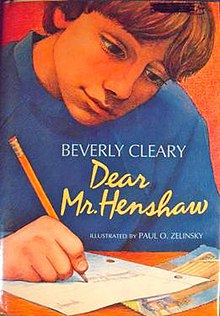
Dear Mr. Henshaw 
by Beverly Cleary


In this sweet story about a boy who is going through a difficult time in life which relates to other children his age. The theme and characters in this book create a very realistic story that could be relative to boys and girls across different ages and generations. The main character, Leigh, is having a challenging time at home with his family going through divorce. Confiding in his favorite author, he finds a friend who can help him cope. The characters in the story definitely provide the ability for children to relate and identify with a character like themselves. The theme of this book is centered around family issues and friendship which creates a world that is very similar to the target audience. Children can all relate with family drama, even without going through a divorce situation. The characters and theme of this book clearly explain why it is a favorite among children.

Bridge to Terabithia 
by Katherine Paterson


The plot and characters lure young readers and even adults with the relativity of the situations in the story. Any child who has undergone the loss of a friend, need for a safe haven, or ever struggled with relationships will quickly relate to this event-filled story. In the story’s plot, there are realistic but also very dramatic scenes to keep the reader interested from the first page to the very last. Although a fictional safe haven, Terabithia provides a very real place in a harsh world that the kids can escape from reality making it easy to identify with at many ages. The setting for this story is vital to the plot development since Terabithia was the place that served as a safe haven. Many children can relate to a location where they feel comfortable and free of worry.

Crossover 
by Kwame Alexander


This book is eye-catching and intriguing from just the front cover, unless you aren’t a fan of basketball. Of all the evaluative criteria, this book identifies most with style and gender. The style of this book is very unique since it is written in verses like a poem and is very fast-paced. Its catchy rhythm keeps readers interested and engaged throughout the short novel. The style of this author gives a unique twist that makes the novel difficult to compare. This book is about a basketball star who has a crush on a girl at school which seems to relate more with a male audience. The basketball culture and following is exemplified throughout using terminology and slang phrases coined by the main character.

George 
by Alex Gino


While not all children can relate with a character who is transgendered, they can recognize the feeling of being different or peer pressure. Of the evaluative criteria, both character and culture/gender are the most prominent in this novel about a boy struggling with the pressure to please his family but also feel comfortable in his body as a girl. The main character is forced to be someone he isn’t when his family only accepts him as George. When they are away, he identifies with his true self as Melissa. All children struggle with identify and finding their true self even if it is not quite this situation. On the same note, character development ties directly in with the elements of culture and gender because of the recent media and legality of people who identify as transgendered.

Orbiting Jupiter 
by Gary D. Schmidt


An emotional and deep story about a teenager’s search for his daughter while undergoing difficult situations is engaging for people of all ages. Joseph and Jake are new friends who met through their foster home. The struggles and difficulty that Joseph faces throughout life and the search for his daughter are heartbreaking. Students can either relate or learn about the culture of children who live in poverty or homelessness through the characters and culture in this novel. The theme of this story is compelling and very in-depth emotionally. It is a story that is long-lasting and memorable for all readers.